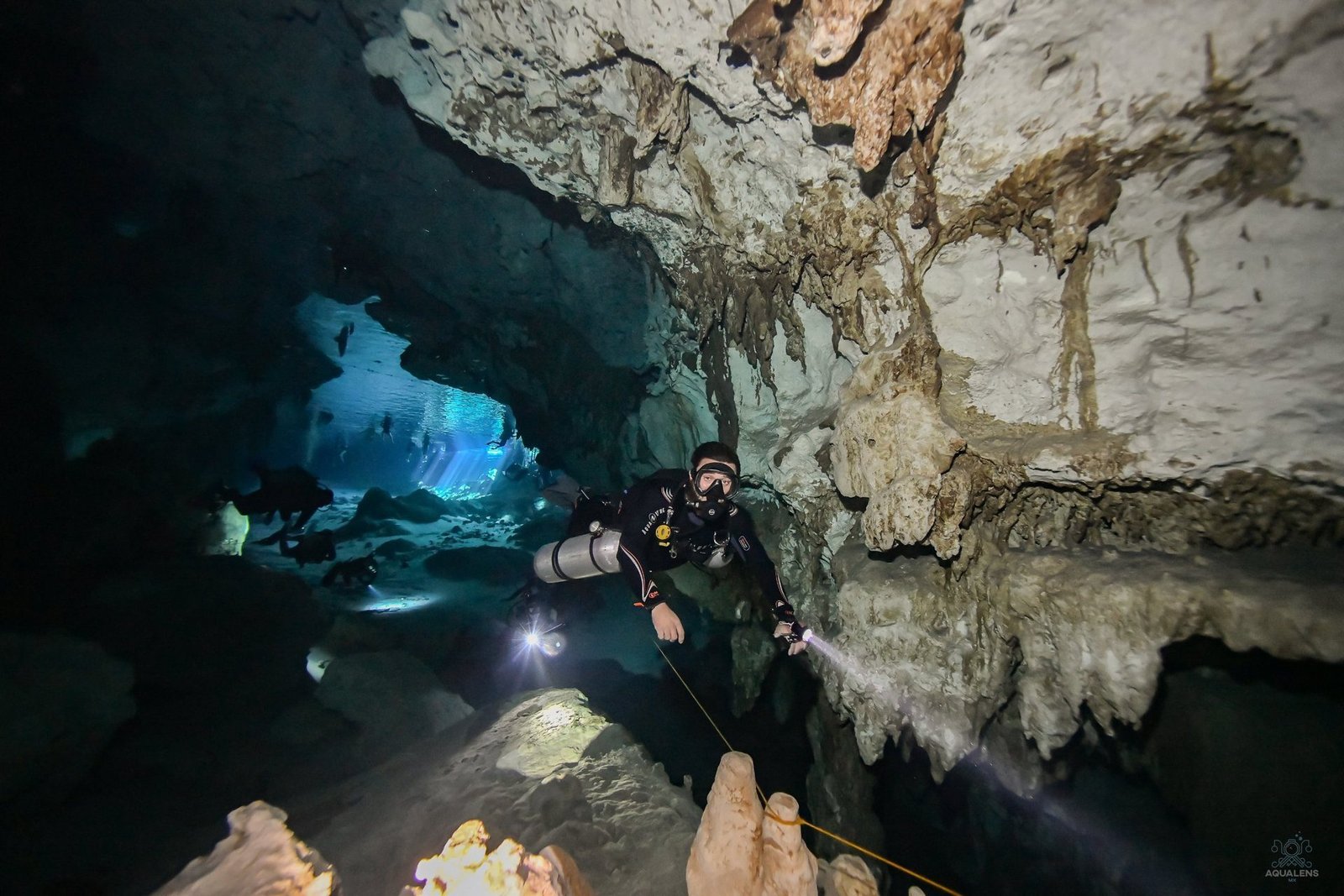
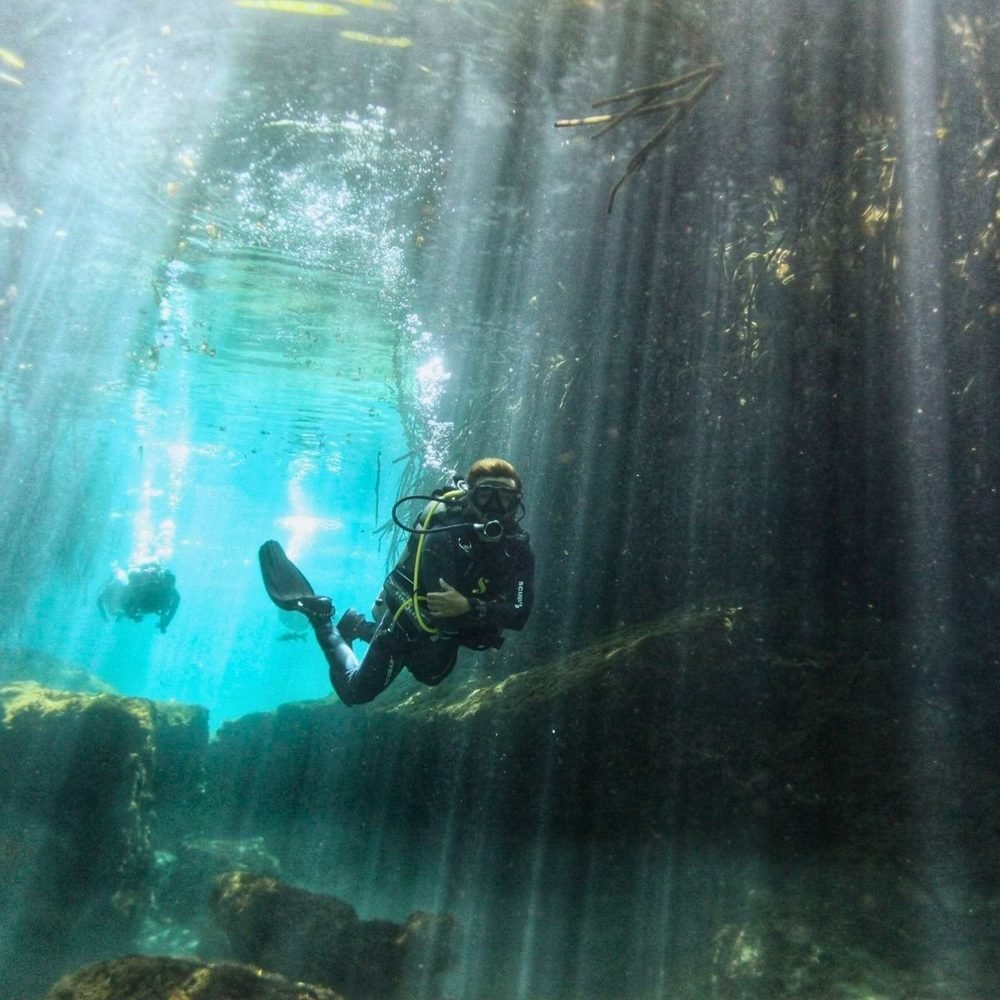
The Pit leaves divers with hundreds of logged dives speechless. A vertical shaft where, at thirty metres, a hydrogen s…
MX$5,000MX$4,600per person
View details ›
What exactly is a cenote
A cenote is a natural cavity formed when limestone collapses, exposing the underground river that runs beneath the entire Yucatán Peninsula. For diving, that means fresh water filtered through kilometres of stone: so clear that judging depth is sometimes difficult, with no current, no swell, and a constant 25 °C all year.
It is a radically different experience from the sea. You will not see fish schools or turtles — you will see geology. Stalactites that took thousands of years to form, vertical light beams, haloclines where fresh and salt water blur your vision, and in some systems, fossil remains.
Cavern, not cave — the difference matters
This is the single most important safety distinction in cenote diving and it is worth understanding before you book.
Cavern is what we do: you always dive within reach of natural light, along a permanently installed guideline, with a specialist guide. It is accessible with an Open Water certification and it is a highly controlled environment.
Cave is technical diving in total darkness, beyond daylight, with redundant equipment and multi-level specific training. We do not offer it as a recreational activity, and be wary of anyone selling it to you without the matching certification.
Which cenote to choose for your level
First cenote with an Open Water card: Dos Ojos. Wide, bright, with the most photogenic stalactites and visibility around forty metres. Also 7 Bocas + La Maravilla, with its seven light columns.
Advanced certified and after depth: The Pit + Nicte Ha is the most spectacular of all, with the hydrogen sulphide cloud at thirty metres. Kin Ha + Zapote takes you to the Hell's Bells.
Not certified: Casa Cenote. Open, shallow and instructor-guided, it is the only format possible without certification.
Nitrox certified: Azul Ha + Zapote maximises bottom time at the deep sites.
FAQ
Frequently asked questions
Is cenote diving cold?
The water stays around 25 °C all year. A 3 mm wetsuit is enough for two dives. If you feel the cold badly, tell us and we will adjust the thickness.
Do I need certification to dive cenotes?
Yes for cavern cenotes: Open Water minimum, and Advanced for deep sites like The Pit or Zapote. The exception is Casa Cenote — open and shallow — where you can dive without certification alongside an instructor.
Which cenote is best for a first time?
Dos Ojos, without hesitation. It is wide, very bright, with spectacular formations and enormous visibility. After that one, The Pit is far more enjoyable.
Is transport to the cenote included?
For Dos Ojos and Casa Cenote we include hotel pick-up in Cancun or the Riviera Maya. Other trips depart from Cancun or the Riviera Maya; ask us about the meeting point when booking.
Verified reviews
What our divers say
Real reviews published on our Google Business Profile.
“Excellent experience! Rene is a brilliant guide — you can tell he loves what he does and passes on his passion for the sea and marine life at every moment. His instructions and dive plan before every dive make you feel safe and let you enjoy the flora and fauna even more. Highly recommended, I already want to plan new dive trips!”
Judith Schramm FloresLocal Guide · 19 reviews
★★★★★
“I had an excellent experience with Scuba & Adventours Mexico starting my PADI Open Water Diver certification. Everything was explained very clearly and all my questions were answered along the way. Instructor René has a real talent for explaining things simply and clearly.”
Alejandro CorresPADI Open Water course
★★★★★
“My first time in the diving world! I'm so grateful because my experience with Scuba was incredible — the support and professionalism of René, Delfina and captain Larry make you feel safe at every step. I'll definitely be back with them to certify.”
VictoriaLocal Guide · 28 reviews
Shall we book your dive?
Message us on WhatsApp and we'll confirm availability the same day. Small groups — spots go fast in season.