
PADI courses
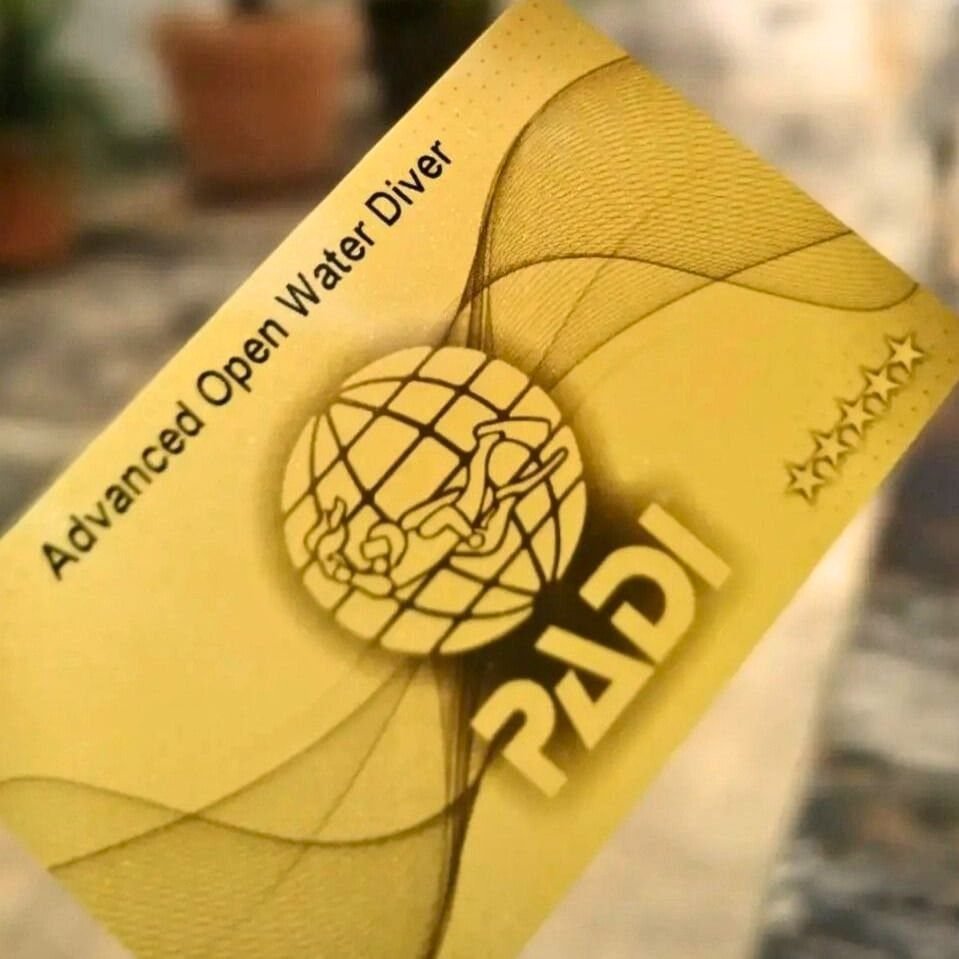
PADI Advanced Open Water Diver course
The Advanced is not a theory course: it is five dives where you learn by diving. When you finish you can go to thirty …
US$559US$515per personMX$8,700 · charged in Mexican pesos
View details ›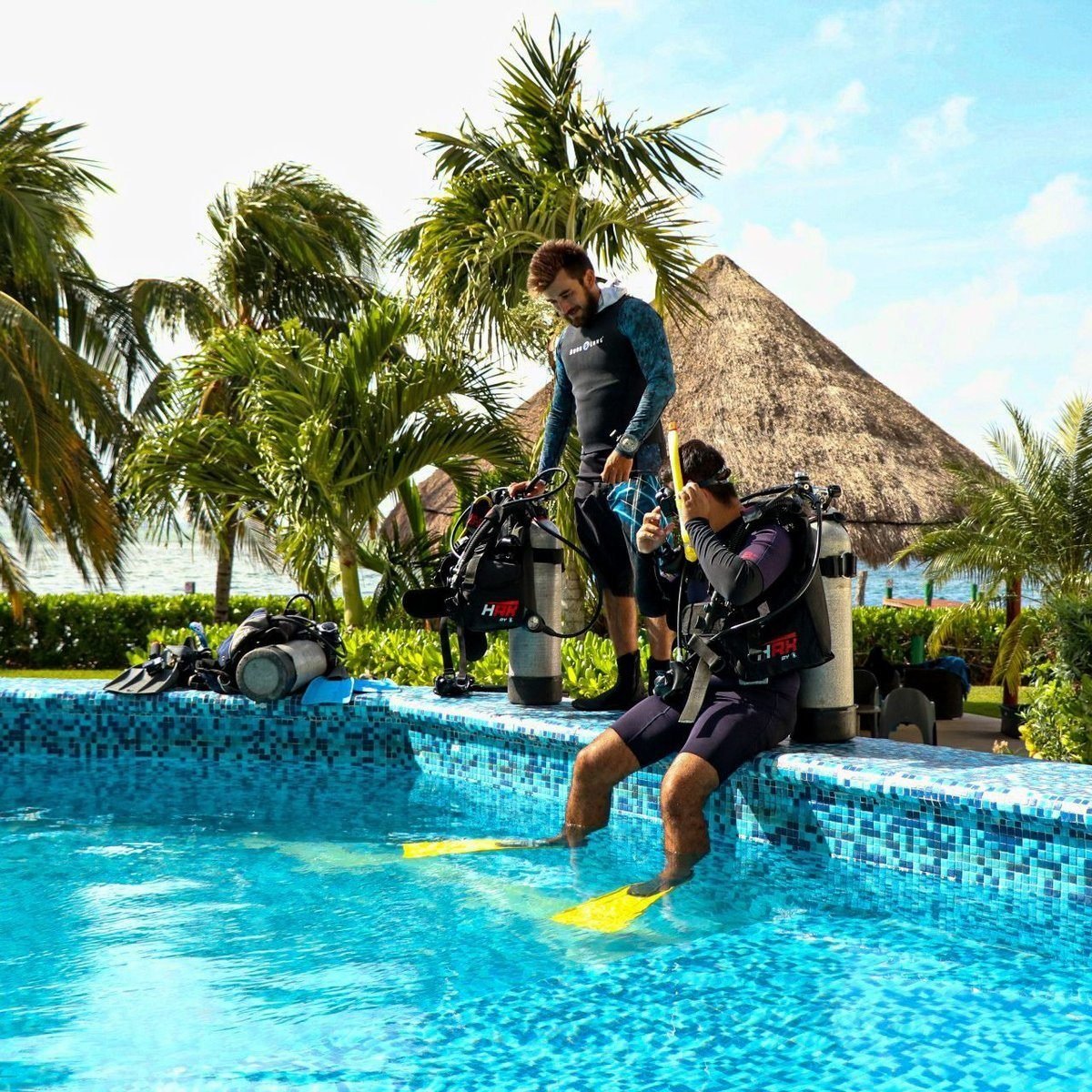
From never having dived to diving anywhere in the world, in two or three days.
The Advanced is not a theory course: it is five dives where you learn by diving. When you finish you can go to thirty …
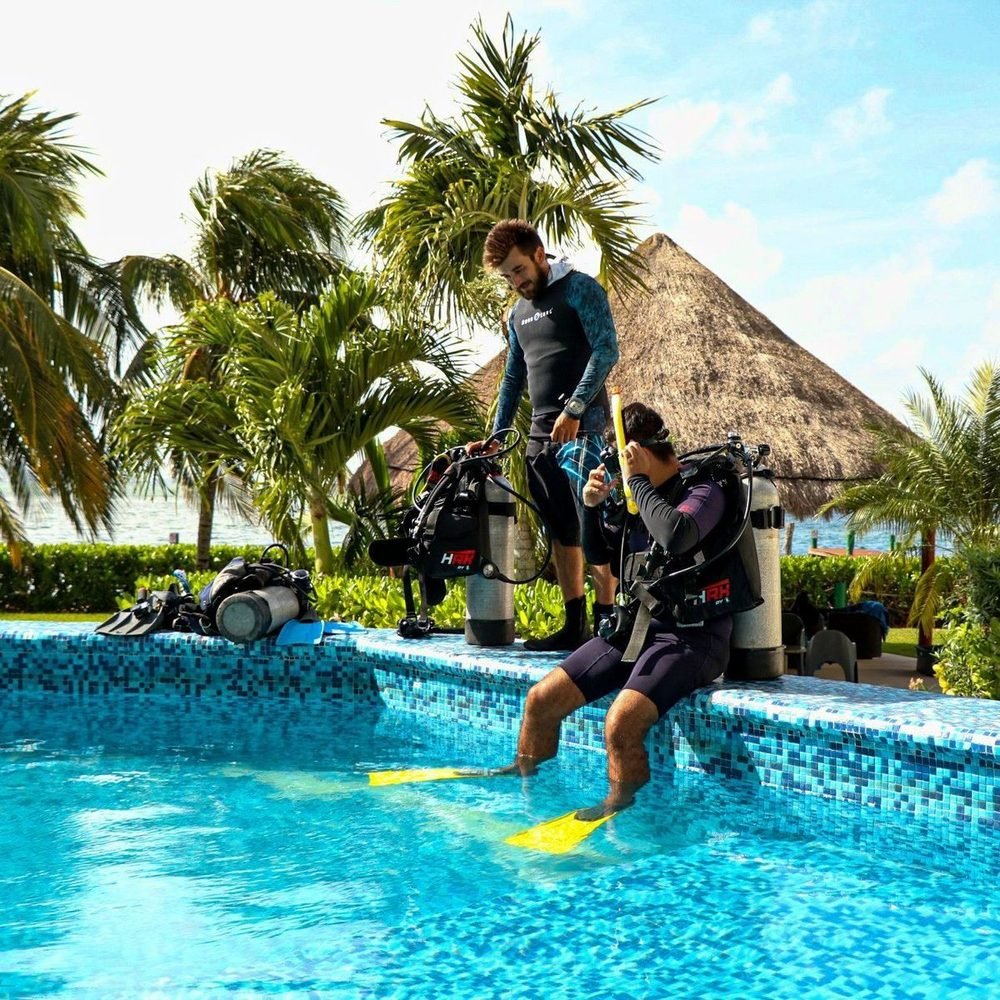
The Open Water Diver is the most recognised diving certification in the world and the one that genuinely makes you a d…
The PADI ladder has a lot of names and almost nobody explains it straight through. Here is what each level opens up, how long it takes and what it costs with us.
| Level | Prerequisite | Duration | Max depth | What it lets you do |
|---|---|---|---|---|
| Discover Scuba Diving | None | half a day | 12 m | Not a certification: a guided try-dive. |
| PADI Scuba Diver | None | 2 days | 12 m | Partial certification. You may only dive accompanied by a professional. |
| PADI Open Water Diver | None | 2–3 days | 18 m | The real certification: you dive with a buddy, no guide required, anywhere in the world. This is the one we teach. |
| PADI Advanced Open Water | Open Water | 2 days | 30 m | Five specialty dives. Opens deep cenotes, wrecks and bull sharks. We teach this one too. |
| PADI Rescue Diver | Advanced | 3 days | 30 m | Emergency management. The step before the professional track. |
| PADI Divemaster | Rescue | weeks | 40 m | First professional level: you can guide certified divers. |
For ninety per cent of people the path is straightforward: Open Water and, if diving hooks you, Advanced. Scuba Diver exists for anyone without three full days, but it leaves you with a half-finished certification you will have to complete later.
| Course | Price | Dives | Days | Includes |
|---|---|---|---|---|
| PADI Open Water Diver | US$529 (MX$9,000) | 4 + pool | 2–3 | Theory, pool session, 4 open-water dives, equipment and certification |
| PADI Advanced Open Water | US$515 (MX$8,700) | 5 | 2 | 5 specialty dives, equipment and certification |
What is NOT included: a medical certificate if any answer on the health questionnaire requires one, transfer from hotels outside the agreed zone, and cenote park fees if you choose to do a dive there. We say so before charging, not after.
Certifying in Cancun costs less than in Europe or the United States, and the difference is not only price: you do your four open-water dives in water at 26 to 29 °C with twenty metres of visibility, instead of in a cold quarry.
A certification you never use goes stale fast. These are the trips each level opens up, so you know what you get access to the day you finish.
| With your new certification | This opens up |
|---|---|
| Open Water | MUSA and the Cancun reefs, Puerto Morelos National Park, the Playa del Carmen reefs, Cozumel drift diving, 7 Bocas and Dos Ojos cenotes, night diving |
| Advanced | All of the above plus the C-56 wreck, the deep cenotes (The Pit, Kin Ha, Azul Ha) and the Playa del Carmen bull sharks in season |
Our honest recommendation: do the Open Water, dive six or seven times on that certification, and only then consider the Advanced. Stacking both courses into four days leaves you with a card and no hours in the water.
The three questions people ask us on WhatsApp before any other. We answer them with the PADI standards in hand rather than with a vague «it depends»: if something rules you out, we would rather you knew today than on the morning of the course.
| Certification | Age | Maximum depth | Condition |
|---|---|---|---|
| Junior Open Water | 10–11 | 12 m / 40 ft | Must dive with a PADI Professional or a certified parent or guardian |
| Junior Open Water | 12–14 | 18 m / 60 ft | Accompanied by a certified adult |
| Open Water Diver | 15 and over | 18 m / 60 ft | Full certification, no mandatory supervision |
| Junior Advanced | 12–14 | 21 m / 70 ft | Open Water required first |
| Advanced Open Water | 15 and over | 30 m / 100 ft | Open Water required first |
A diver certified before 15 upgrades to the adult certification on their fifteenth birthday, without repeating the course.
Before you get in the water you sign the Diver Medical | Participant Questionnaire, PADI's form with ten yes/no questions. If every answer is no, that is the end of it: you sign and you dive. A physician's evaluation is only required if you answer yes to questions 3, 5 or 10, or to any question on the second page — broadly asthma and breathing problems, heart conditions, recent surgery, epilepsy, diabetes and pregnancy. We send you the form before you travel so that, if it applies to you, you can sort it out at home instead of here.
You do not need to be a swimmer. The requirement is: swim 200 m/yd without stopping, any stroke you like, or 300 m/yd in mask, fins and snorkel, and then float or tread water for 10 minutes, again any way you like. There is no time limit on either. It is done in calm water with your instructor beside you.
The Open Water course has three parts and the order never changes: theory, confined water, and four open-water dives. What changes is how they are split across your days. This is how we run it around the 7:00 departure.
| Day | What happens | Time in the water |
|---|---|---|
| Before you travel | Theory online (PADI eLearning) and the signed medical questionnaire | — |
| Day 1 | Theory review, gear assembly and the confined-water session: the core skills in shallow water | Half a day |
| Day 2 | Open-water dives 1 and 2, repeating the skills at real depth | 7:00 departure |
| Day 3 | Dives 3 and 4, final assessment and certification paperwork | 7:00 departure |
People who arrive with the theory already done usually finish in two days. People who would rather not study on holiday do it here and it takes three. Both cost the same: you pay for the course, not for the days.
Advice that works against our own calendar: put the course at the start of your trip, not the end. Two reasons. First, if the sea shuts a day down, there is room to make it up. Second is in the next section and has to do with your flight home.
Almost nobody asks about this and it is what ruins the most trips. You cannot fly straight after diving: cabin pressure can turn nitrogen that would have been harmless at sea level into decompression sickness. The recommendations from DAN (Divers Alert Network), the reference in this industry, are explicit:
Translated into your itinerary: if your flight leaves in the morning, your last dive has to be two days before. That is why we push for the course at the start of the trip. We tell you at booking and we check it again against your flight time before locking the dates.
A PADI card is for life: no renewal, no annual fee, no expiry date. What PADI does recommend is a refresher (ReActivate) if you go six to twelve months or more without diving. It is not a requirement to dive with us; it is an hour of practice that changes the first dive after a long break.
Real reviews published on our Google Business Profile.
“Excellent experience! Rene is a brilliant guide — you can tell he loves what he does and passes on his passion for the sea and marine life at every moment. His instructions and dive plan before every dive make you feel safe and let you enjoy the flora and fauna even more. Highly recommended, I already want to plan new dive trips!”
“I had an excellent experience with Scuba & Adventours Mexico starting my PADI Open Water Diver certification. Everything was explained very clearly and all my questions were answered along the way. Instructor René has a real talent for explaining things simply and clearly.”
“My first time in the diving world! I'm so grateful because my experience with Scuba was incredible — the support and professionalism of René, Delfina and captain Larry make you feel safe at every step. I'll definitely be back with them to certify.”
Message us on WhatsApp and we'll confirm availability the same day. Small groups — spots go fast in season.