Bull sharks in Playa del Carmen: when to go, which format and is it safe
Every winter, female bull sharks arrive off Playa del Carmen. What it's like, when, and what you need.
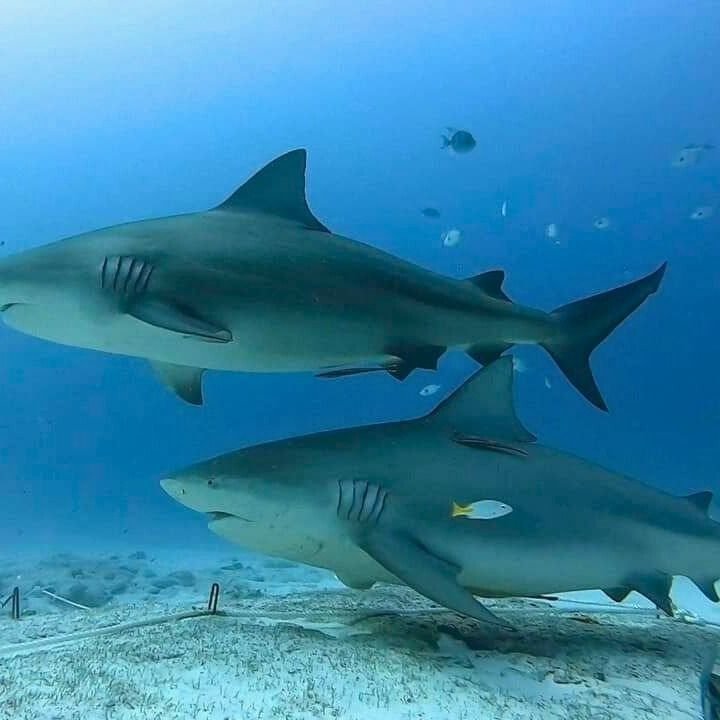
When is bull shark season?
November to March, peaking between December and February. Outside that window the sharks are not here — they disperse and the trip makes no sense, so we do not offer it.
November. The first arrivals. Sightings become regular around mid-month, though the number of animals per dive is still low.
December and January. The best of it, by a distance. Most animals, most time with them. Also peak tourist season, so it books out weeks ahead.
February. As good as January with fewer people. If you can pick your dates, this is our recommendation.
March. They start leaving. The first half still works; after that it is a lottery.
As with any wildlife activity there is no guarantee. What there is, is a strongly marked seasonality that repeats year after year — the closest thing to a guarantee the ocean offers.
Why they come here and not somewhere else
Almost nobody explains this, and it is what makes Playa del Carmen particular.
The bull sharks that arrive each winter are overwhelmingly pregnant females. Bull sharks are unusual among large sharks in tolerating fresh and brackish water — and they actively seek it out to gestate. The coast at Playa del Carmen sits directly above the Yucatán underground river system, and that fresh water discharges into the sea through submarine springs.
In other words: they come for the same water that makes the cenotes exist. The two great attractions of this coast are, literally, the same geological phenomenon seen from two places.
That is why it is so consistent in the calendar and so localised in space: it is not chance and it is not an artificial feeding ground, it is a reproductive cycle. And it is why, when the cycle ends in March, they leave.
The dive, minute by minute
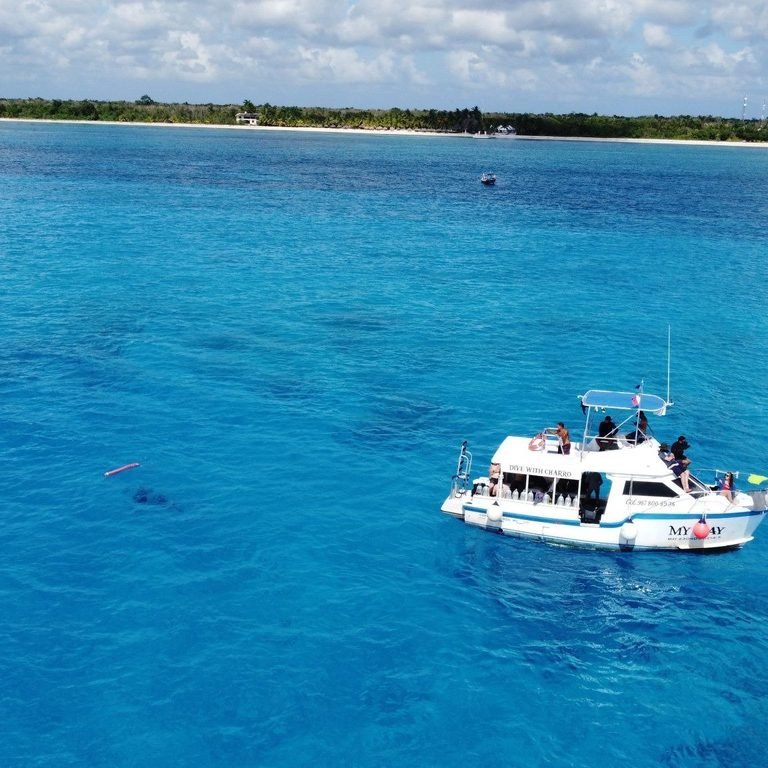
Before entry. A long briefing on the boat, rules stated twice. Shiny watches come off and anything dangling and reflective gets stowed.
Descent. Down together as a group, to around 20–25 metres. The bottom is sand, no reef: this is a blue-water dive with the group settled on the floor.
The first few minutes. Usually nothing. Sand and blue, and plenty of people start wondering whether anything is going to happen.
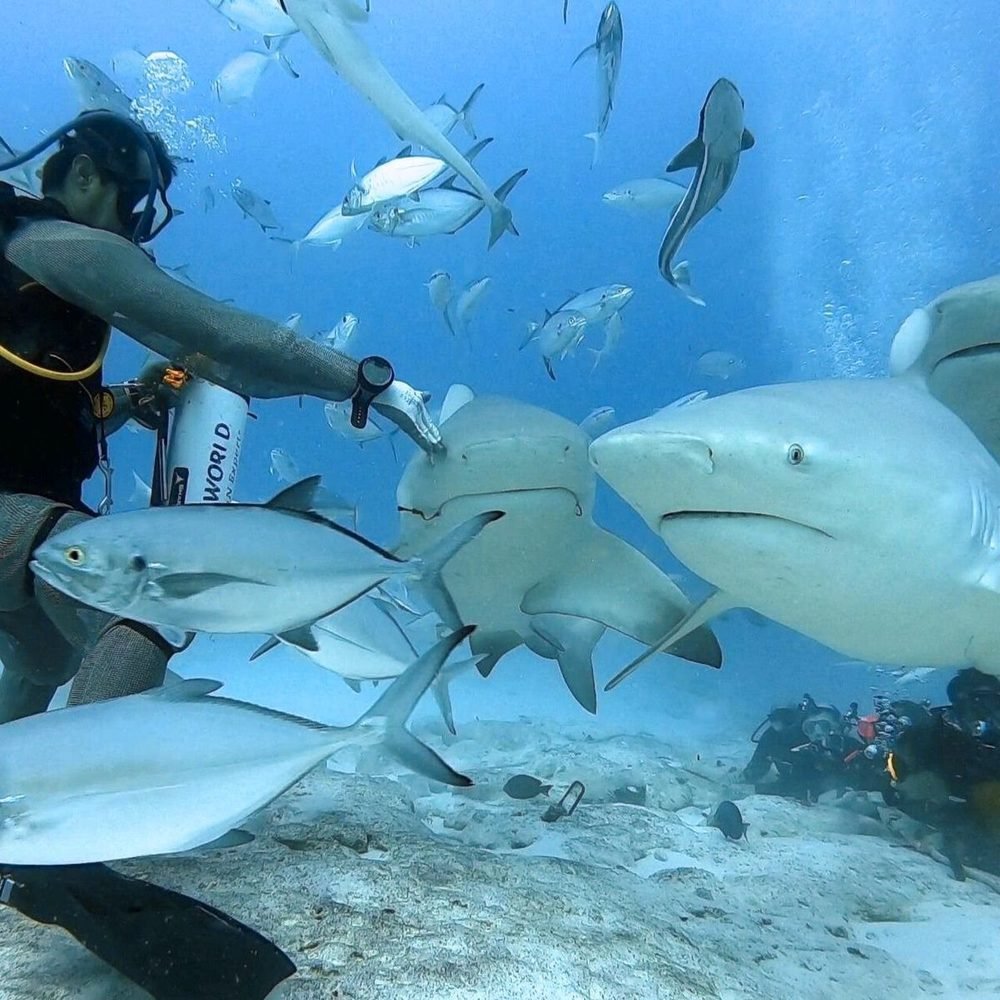
The first appearance. Almost always from behind or to one side, with no noise and no drama. A two-and-a-half-metre animal, broad, passing at middle distance without paying you much attention. What nearly everyone describes afterwards is not fear — it is how calm it is.
The rest of the dive. They come and go. There may be one, there may be eight. The group stays together and still on the bottom; the sharks circulate.
Ascent. Orderly, as a group, with a safety stop. Never a scramble, even with animals still close.
Typical duration: 35–45 minutes depending on depth and consumption.
Natural observation versus controlled feeding
Two versions of this trip coexist in the area, and you should know which one you are buying, because both the experience and the ethical argument differ.
Natural observation. No bait of any kind. You descend where the animals are and wait. There are extraordinary days and days of two distant sightings. It is genuine wildlife diving, with the uncertainty that implies.
Controlled feeding. A feeder in a chainmail suit offers pieces of fish, which concentrates the animals and brings them closer. Sightings are far more reliable and the photographs are better.
The debate, honestly. Those who defend feeding argue that it concentrates the activity at a controlled point with a professional dedicated to the animals, and that it creates a large economic incentive to conserve a shark that is worth little out of the water. Those who criticise it argue that it alters behaviour and associates humans with food.
Where we stand. We offer both and we tell you which is which without dressing it up. If this is your first time with large sharks, natural observation is what we recommend: fewer animals, but real behaviour. If you have come specifically to photograph and you have one day, controlled feeding delivers more. What we do not do is sell one as the other.
Is it safe? The short version
Yes, and the main reason is that a bull shark has no interest in a diver. A human on a tank resembles nothing it eats, makes noise, releases bubbles and does not flee — the opposite of prey.
What does matter is procedure: group together, settled on the bottom, no sudden movement, nothing shiny, orderly exit. The overwhelming majority of shark incidents worldwide happen at the surface, in activities where the animal misreads a silhouette — not on organised dives at twenty metres.
We have written it out in full, with the figures published by the International Shark Attack File and with what we specifically do, in is bull shark diving dangerous?
The real requirements
Advanced Open Water certification or equivalent. The dive sits around 20–25 metres, beyond the Open Water limit.
Recent experience. We ask that you have dived within the last year. This is not paperwork: buoyancy control and composure matter more on this dive than on any other, because the group has to stay together and still.
Reasonable consumption. At 25 metres air goes quickly. If you are a heavy breather, say so when booking and we take it into account when forming the group.
What we do not ask for: any shark speciality, any prior course, any previous experience with large animals. Plenty of people do their first shark dive here.
If you hold Open Water and want to come, there is room: the Advanced can be done in two days before the trip. We cover it in the guide to Open Water versus Advanced.
How to behave underwater
These rules are not decorative. They are the reason this activity has the record it has.
Still and together. The group settles on the bottom and stays as one. A diver who drifts off stops being part of a large block and becomes a loose silhouette.
No sudden movement. No hard fin kicks, no fast turns, no pointing with an extended arm. Everything slow.
Nothing shiny. Metal watches, bracelets, fins with chrome parts. A brief flash in blue water is exactly the cue a shark associates with an injured fish.
Do not chase or cut them off. If an animal comes close, you let it pass. You never swim towards it or block its line.
No touching. Ever. Not with the camera, not with a pole, not «just a brush».
Ascend when told. Even with animals nearby and even with air remaining. The ascent is made as a group, in order.
Kit and photography: what works and what does not
Wetsuit. 5 mm. From November to March the water drops to 24–26 °C and you spend nearly the whole dive still on the bottom, which is when you chill.
Colours. Dark, matte kit. No fluorescent yellow wetsuits, no chrome fins.
Camera. Wide angle. The sharks pass close and a narrow lens catches nothing. A fisheye or a 16–35 equivalent is what works.
Strobes and lights. Usable in moderation. What you do not do is fire a burst at an animal approaching head-on.
What does not work: the selfie stick. It takes space, it moves, it shines, and it is the first thing we ask people to stow.
Weighting. A little more than usual. You need to stay planted on the bottom without lifting, and with 5 mm and a full tank that takes some doing.
What else you can see in the same months
November to March is not only bull sharks, and if you are coming for them it is worth using the rest.
High visibility in Cozumel. Winter delivers some of the best days of the year on the Cozumel walls, with clean drift and very clear water.
The cenotes, exactly as always. They have no season: 25 °C and forty metres of visibility, twelve months a year. A bull shark day plus a cenote day is the combination we recommend most in winter.
The nortes. This is what to plan around: between November and February, northerly wind fronts can close the boats for a day or two. Which is why you do not leave the bull shark trip for the last day of your holiday. We explain it in the guide to the best time to dive in Cancun.