Is bull shark diving dangerous? What the data says
The question everyone asks before booking, answered with verifiable data and the actual procedure rather than reassuring phrases.
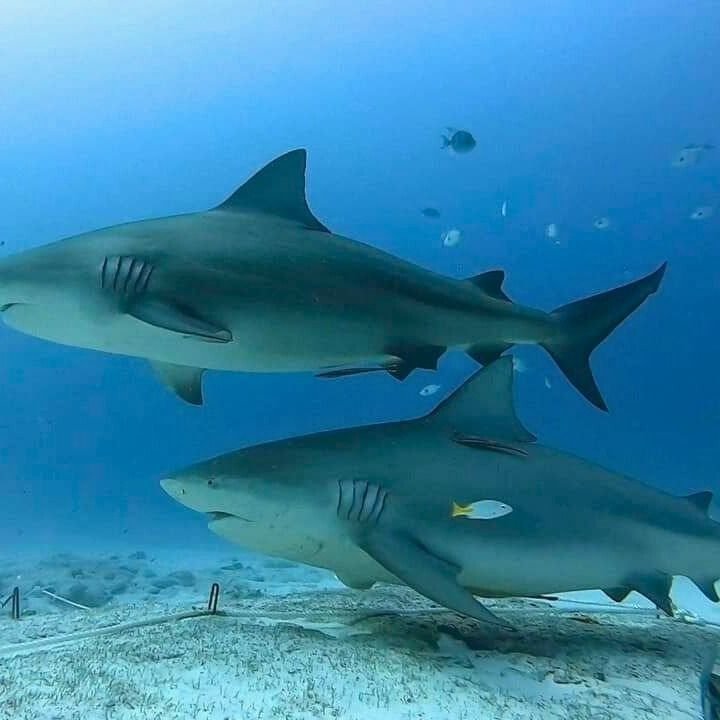
The short answer
Yes, it is safe — and not because we say so, but because a bull shark has no reason to attack a diver, and because the dive is designed so that none of the situations in which a shark does get confused can arise.
That said, «safe» does not mean «without rules». It means the risk, when the procedure is respected, is very low. This article sets out where that claim comes from, with the published figures and with what we specifically do, so you can decide for yourself rather than trust a line from a brochure.
What the published figures say
The global reference record is the International Shark Attack File, maintained for decades by the Florida Museum of Natural History at the University of Florida.
Its 2025 summary recorded 65 unprovoked bites worldwide, of which 9 were fatal. The previous ten-year average is 72 bites and 6 deaths per year. These are global figures — every ocean and every water activity on the planet combined.
Two qualifications worth not skipping, because they are what give the numbers context:
Most cases in the database do not identify the species. The report says so itself. Anyone quoting you an exact figure for «bull shark attacks» is extrapolating.
The activities involved are not organised scuba diving. Documented cases cluster at the surface: surfing, swimming, fishing, free diving. That is consistent with the mechanism explained in the next section.
We are not going to give you a specific statistic for «incident-free bull shark dives in Playa del Carmen», because nobody keeps that record publicly and verifiably. We would rather tell you the figure does not exist than invent one.
Source: International Shark Attack File, Florida Museum of Natural History (floridamuseum.ufl.edu), 2025 yearly summary.
Why a bull shark does not read you as food
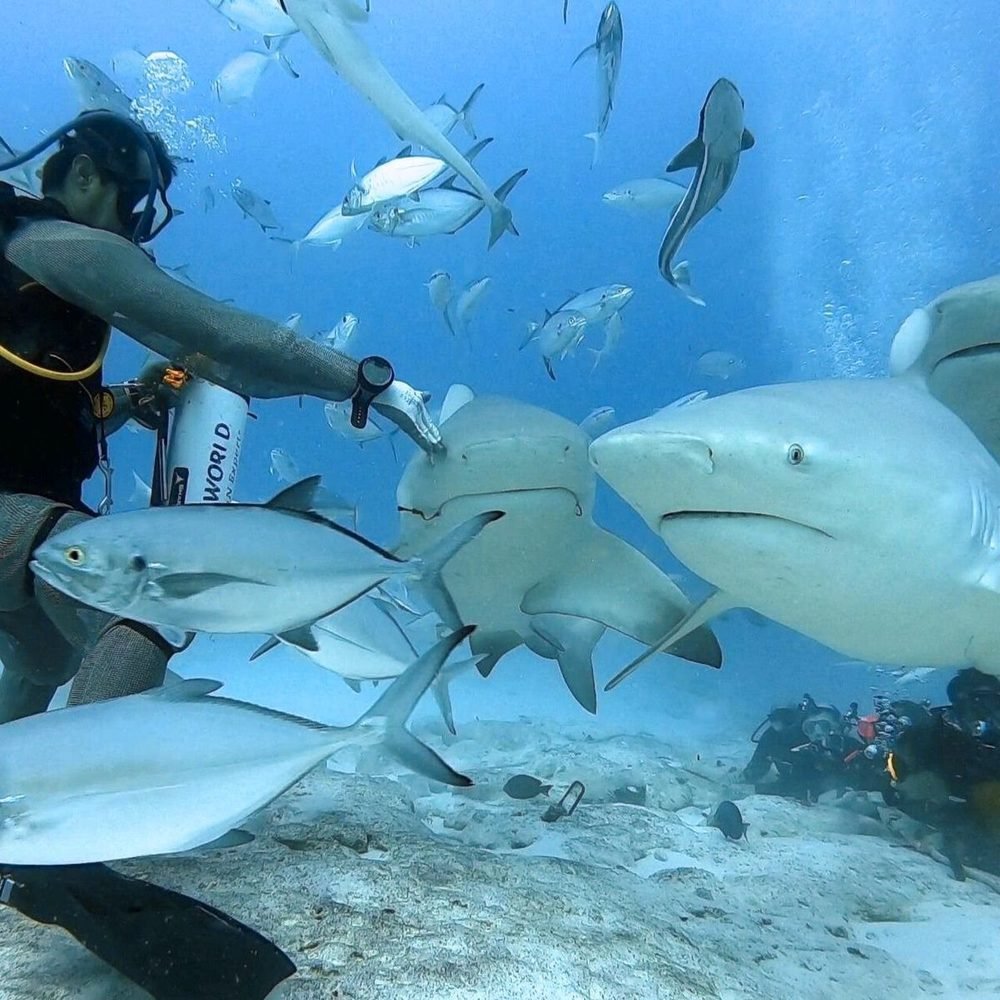
A shark hunts by elimination: it discards what does not fit the prey pattern and investigates what does. A diver on a tank fails every point of the pattern.
The size is wrong. A diver in full kit is nearly two metres and broad. Bull sharks eat fish, rays and crustaceans — things much smaller than themselves.
The sound is wrong. Regulator bubbles make a constant, low noise no prey produces. In most cases that noise pushes animals away rather than drawing them in.
The behaviour is wrong. Prey flees, thrashes, swims erratically. A group of divers settled still on the bottom does none of that. A shark reads calm as «this is not food and probably not worth finding out».
The silhouette is wrong. And this is the key point. Cases of mistaken identity worldwide almost always occur seen from below, against surface light: a surfboard with arms and legs hanging resembles a turtle or a seal. At twenty-five metres, resting on sand, there is no backlight and no silhouette to misread.
The three points where risk is real (and they are not the ones you think)
There is risk in this activity, but it sits somewhere other than where people imagine.
1. The depth, not the shark. This is a 20–25 metre dive. Air consumption, mild narcosis and managing the safety stop are the factors that genuinely need handling. That is why we require Advanced Open Water and recent experience — not because of the animals, because of the profile.
2. The diver who drifts from the group. Not because they will be attacked, but because they stop being within the guide's control at twenty-five metres in blue water. It is the same risk as on any deep dive, compounded by the distraction of watching sharks.
3. Panic. Seeing a large animal close up for the first time is affecting. Someone who takes fright and ascends fast from twenty-five metres is exposing themselves to far more risk than any shark. That is why the briefing insists that if something unsettles you, you signal the guide and we go up in order.
Note the pattern: all three are diving risks, not shark risks. And all three are controlled by procedure.
What we do, specifically
We filter before booking. We ask for Advanced certification and dives within the last year. If someone does not meet it, we offer them the Advanced first rather than taking them anyway.
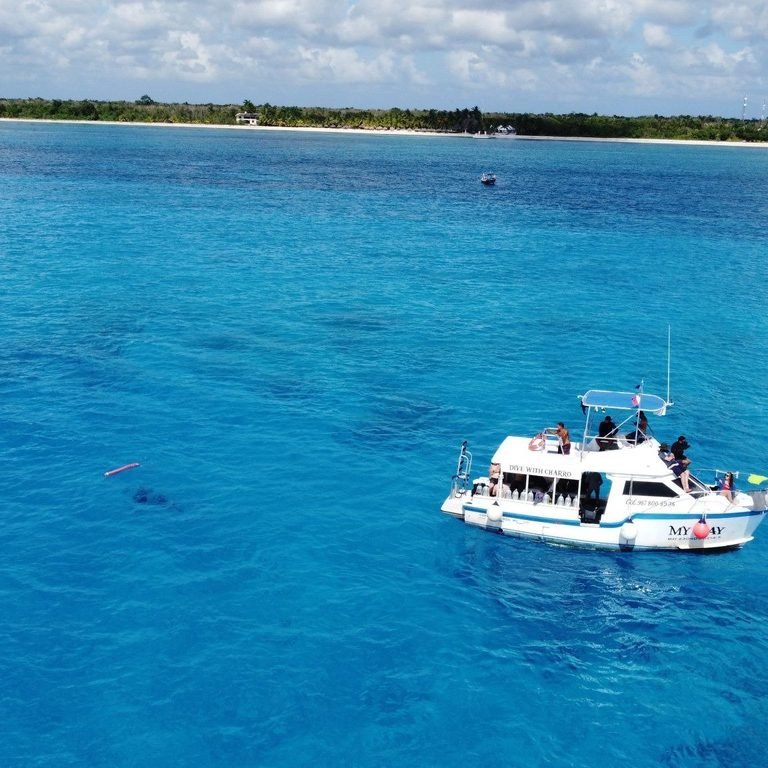
Small groups. One guide cannot watch twelve people at twenty-five metres in blue water. We run small groups because it is the only way the «nobody separates» rule is real rather than aspirational.
Double briefing. Rules explained twice, on land and on the boat, with a check that they have landed. Not formality: half the safety of this dive lies in everyone doing the same thing.
Kit check before entry. Shiny watches, bracelets and anything reflective and dangling come off.
Group ascent, always. Even with animals still around and air to spare.
And we cancel. If a norte comes in, if visibility is poor, or if we watch someone in the water and judge they are not comfortable, we cancel or change the plan. Losing a trip costs money; forcing one costs a great deal more.
What you need to do
Stay still and stay with the group. That is ninety per cent of it.
Wear nothing shiny. A flash in blue water is the cue that most resembles an injured fish.
Do not chase or block. If an animal approaches, you let it pass.
Do not touch. Not with a hand, not with a camera.
Signal if something is wrong. Before it becomes a problem, not after. Nobody will judge you for going up early; a guide would a thousand times rather escort you to the surface than manage an uncontrolled ascent.
And tell the truth when you book. How many dives you actually have, when the last one actually was, whether you breathe heavily. We are not asking out of curiosity.
If you have never dived with sharks
It is more common than you would think: plenty of people do their first large-shark dive here.
What helps: having dived recently, so the technical side is automatic and your attention is free to look. If your last dive was three years ago, do a reef trip the day before. That is not an upsell — it is the difference between enjoying it and watching your gauge.
What also helps: knowing what it will feel like. The most common reaction is not fear, it is surprise at how little happens. The animals circulate, they ignore you, and ten minutes in you are more concerned with your photograph than with yourself. People come out of the water talking about how calm it was.
And if you are still unsure: the whale shark trip, May to September, is at the surface, on snorkel, with no certification. Plenty of people start there.
The two ways of doing it — observation from the reef and the controlled feeding dive — are on our bull shark diving page, with the full procedure and the season dates.