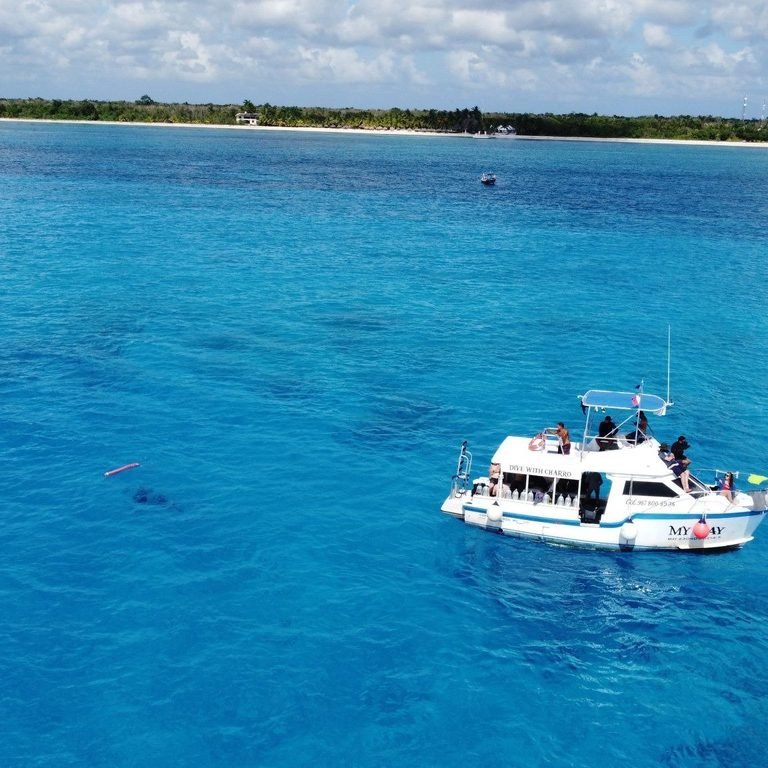
Whale shark season in Cancun, month by month
Every summer, hundreds of whale sharks gather off Cancun and Isla Mujeres to feed. Choosing the right date changes everything.
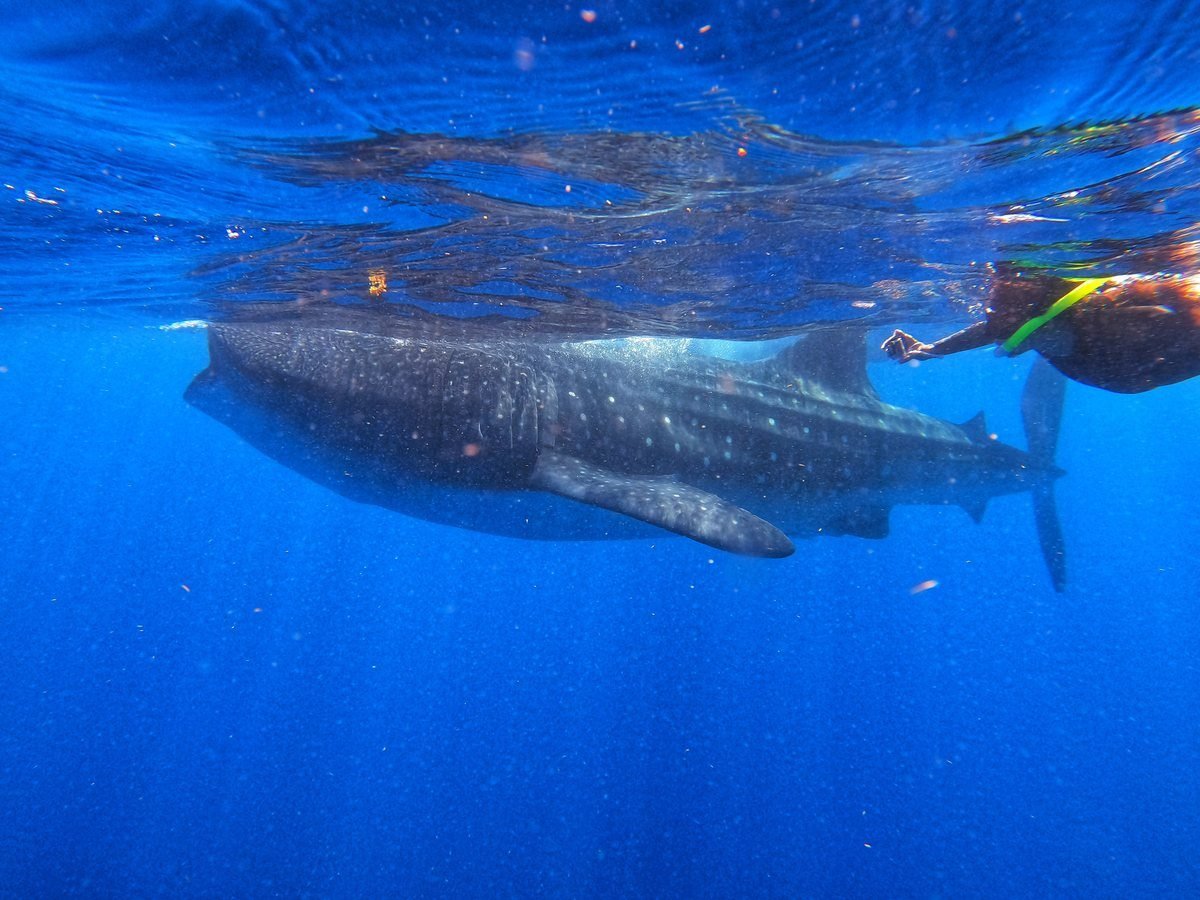
When is whale shark season in Cancun?
The season runs from mid-May to mid-September. During these months, Caribbean currents concentrate plankton near the surface off Isla Mujeres, Isla Contoy and Cancun, and whale sharks arrive to feed in relatively calm water.
It is a well-documented seasonal event: the Mexican Caribbean whale shark aggregation is one of the largest in the world, with hundreds of animals concentrated within a few square kilometres at peak. Outside those months the animals disperse into open ocean, and no serious operator offers the activity.
The season month by month
- Second half of May. Season opening. Fewer boats in the water and already consistent sightings. A good option if you prefer calm over quantity.
- June. An excellent month. Sightings increase steadily and the bulk of summer tourism has not yet arrived.
- July and August. Absolute peak. The largest aggregations form and it is common to see dozens of animals on a single trip. It is also the busiest, so leaving early makes a real difference.
- First half of September. Season close. Excellent days with far fewer people. Our personal recommendation if you want the balance between sightings and calm.
What a trip looks like, hour by hour
The trip runs five to six hours and starts early, usually between 7:00 and 8:00 am from Punta Sam pier, north of Cancun.
After the briefing — covering protected area rules, water turns and minimum distances — we head for the aggregation zone. Travel time varies daily depending on where the animals are: it might be half an hour, it might be more than one.
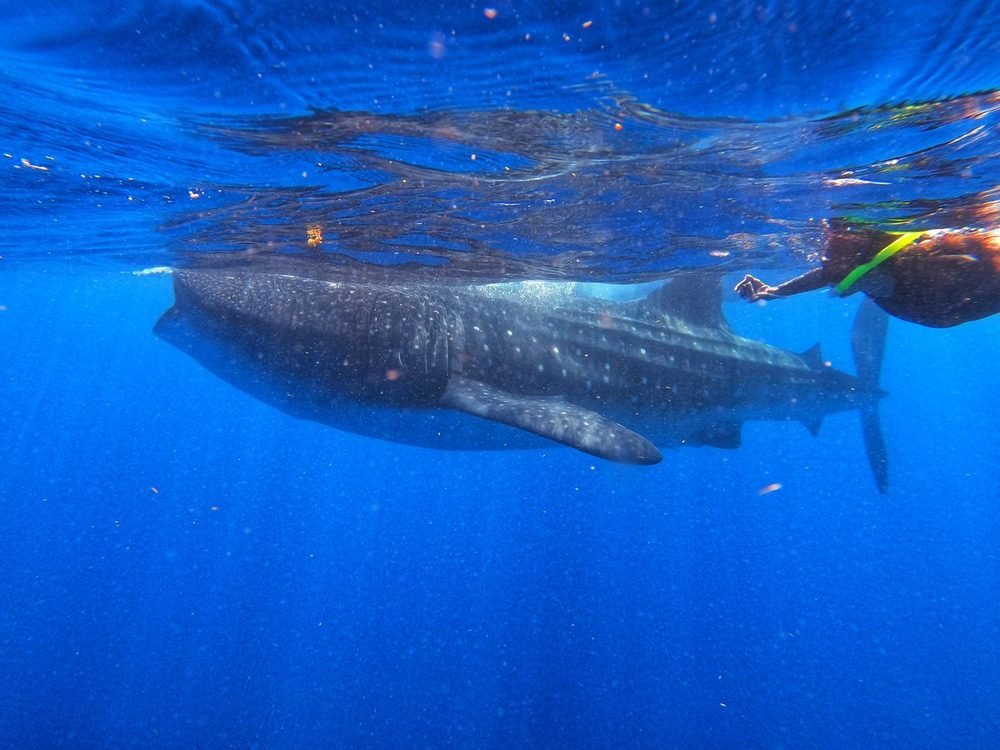
Once located, you enter the water in turns of two swimmers plus the guide. Never more. You get in, swim alongside the animal for as long as the pass lasts, and return to the boat so the next pair can go. Everyone gets several turns across the morning.
On the way back we usually add a reef snorkel stop, which also helps bring the adrenaline down.
Is it safe to swim with a whale shark?
Yes, and it is worth understanding why. The whale shark is a filter feeder: it feeds by opening its mouth and straining plankton and small organisms. It has no interest in a human being and no dentition to do anything with one.
The real risk in this activity is not the animal — it is accidental knocks from the tail fin and from boats. That is why protected area regulations limit the number of swimmers in the water, require a life jacket, set a minimum distance and prohibit touching the animal or cutting across its path.
An operator who lets you touch it, ride it or puts six people in at once is not giving you a better experience: they are exposing both you and the animal.
Diving or snorkelling?
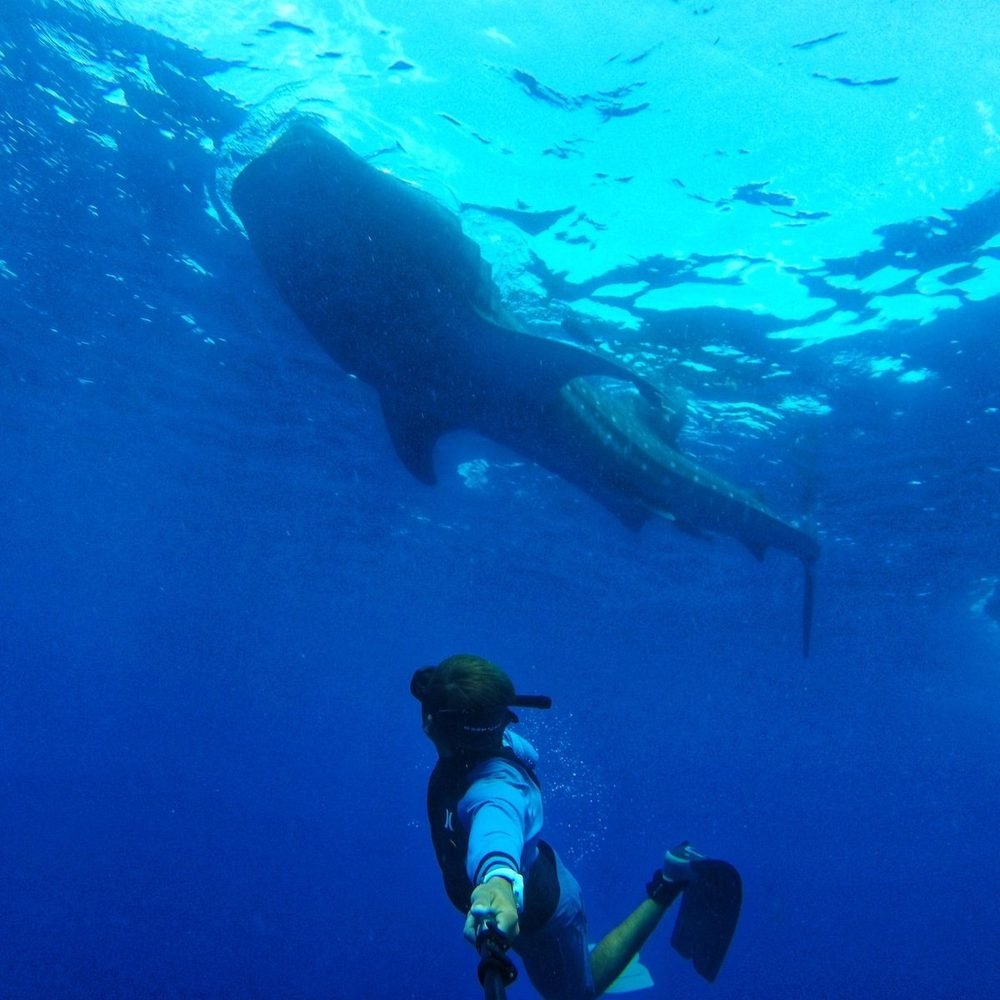
Snorkelling, always. Swimming with whale sharks is a surface activity and doing it on scuba is prohibited. The reason is twofold: regulator bubbles disturb the animal and alter its behaviour, and scuba would force depth profiles incompatible with following a freely moving animal.
The good news is that you need no certification at all. Being comfortable in the water is enough. If you want to dive on the same trip, book the two days separately — never the same day, because of the pressure profiles.
Tips that actually make a difference
- Book ahead. In July and August spots sell out weeks in advance, especially private charters.
- Leave as early as possible. Fewer boats over the animals means better turns and better shark behaviour.
- Biodegradable reef-safe sunscreen is mandatory. Conventional chemical filters damage plankton and coral, and are restricted inside the protected area.
- If you get seasick, take the tablet before leaving land. Open-water crossings can be rough and once aboard there is no fixing it.
- Underwater camera with a wrist strap. And no flash: it is prohibited and it ruins the shot anyway.
- Consider the private charter from six people up. The price works out similar and you gain a flexible schedule and many more turns.